

Meditation is meant to be a peaceful practice, but if you find yourself caught in a loop of endless thoughts, you’re not alone. One of the most common meditation challenges is mind wandering, where your thoughts drift to past regrets, future anxieties, or daily distractions. Overthinking during meditation can be frustrating, making it difficult to achieve mindfulness and relaxation. If you are think that what are those mistakes , then you can check Can’t Focus While Meditating?
Fortunately, there are proven techniques to help quiet your mind and deepen your meditation practice. we will cover the science behind throughts, and how we can rewire our thoughts to work for us not against us. Let’s get into it..
Table of Contents
Acknowledge and Accept Your Thoughts

Start working with Nature, not against the Nature. Otherwise, Nature will punish you. Every organ of our body has it’s solo or multiple function, which they are designed for. Like Tongue is for talking and helping us to Swallow Food, same way mind is built to think on thoughts. surprising your thoughts during meditation is working against the nature of mind. want to learn more about the why our mind wander? check why our mind wander more often.
Instead of fighting your thoughts, acknowledge them without judgment. Overthinking is a natural part of the mind’s function. When thoughts arise, simply recognize them and gently bring your focus back to your breath or mantra.
Use a Mantra or Focus Word
When our mind wander more frequently, we use 1 objective to bring back our mind to the present moment. This is where Mantra came into Existence to bring the focus as you can’t focus while meditating can be frustrating for you, and you find yourself switching between thoughts. while meditation benefits end-up having it potentials. Repeating a mantra or a single word, such as “peace” or “calm,” can anchor your mind and reduce mental chatter. This technique helps create a rhythmic focus, making it easier to prevent your thoughts from wandering.
Practice Mindful Breathing
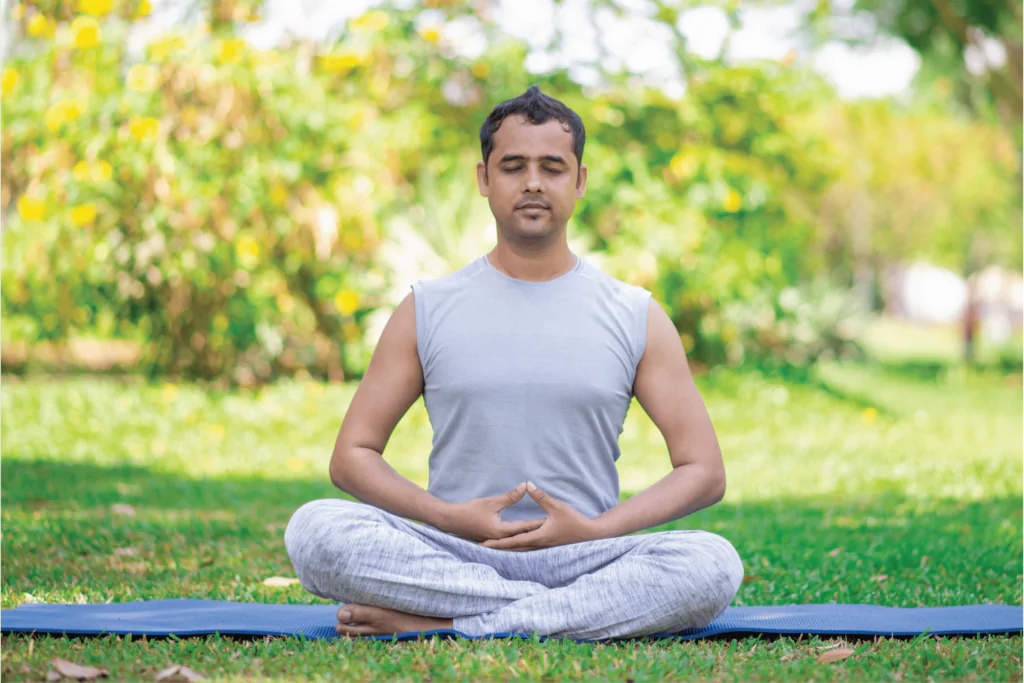
Finding yourself thinking while meditating is completely normal, but the thing that matter is how you bring your mind to focus on the present gently? Whenever you find that you are lost in thoughts, bring back your focus on the breathing. And if you still can’t focus, then you can try to count the breaths, it will help you to stay focused. Your breath is one of the most powerful tools for grounding yourself in the present moment. Try deep, slow breathing and concentrate on each inhale and exhale. When your mind drifts, gently redirect your focus back to your breath.
Engage in Body Awareness
Another way to lock your concentration is to start focus on your body signals. You don’t compare with others, because everyone body, thinking, and situation is different. There would be certain meditation posess that dosen’t work for you, you can change the posture till conform i there. Once you are confortable, still find yourself in flood of thoughts? don’t worry, you can bring back to you body sensation and how do you feel now? This will make you not only focused in meditation, but it also help you to be more aware about body sensation in tough suitation like stresss or anxiety.
A body scan meditation can help bring attention away from overthinking and into physical sensations. Start from your toes and slowly move your awareness upward, noticing any tension or relaxation in each body part.
Set a Meditation Intention

Do you know what truly keeps you motivated to meditate regularly? It’s not just money, success, or recognition those are external rewards. The real driving force behind lasting motivation is your “why” your deeper purpose. Having a clear purpose gives direction to your meditation practice and helps you stay consistent even when your mind resists. For example, you might say, “Today, I’m meditating for 10 minutes to find peace after my recent breakup.” When your purpose for meditation is specific and meaningful, your focus naturally improves. You stop forcing yourself to meditate and start looking forward to it, because each session connects you with your reason for inner calm.
Before starting your meditation, set a clear intention, such as, “I will focus on my breath,” or “I will observe my thoughts without attachment.” This creates a guiding purpose for your practice, reducing the likelihood of mind wandering.
Try Guided Meditation
If your thoughts frequently disrupt your practice, guided meditations can provide structure and direction. Listening to a meditation teacher’s voice can keep you engaged and help minimize distractions.
Be Patient and Consistent
Meditation is a skill that improves over time. Expecting instant results can lead to frustration, which fuels overthinking. Be patient with yourself and commit to a consistent practice, even if it’s just a few minutes a day.
Final Thoughts

Mind wandering and overthinking are common meditation challenges, but they don’t have to derail your practice. By applying these techniques, you can train your mind to stay present and cultivate inner peace. Over time, you’ll notice that meditation becomes easier, and your ability to manage thoughts—both during meditation and in daily life—will strengthen.
Start small, stay consistent, and embrace the process of calming your mind. Happy meditating!
Conclusion
Restlessness doesn’t mean you can’t meditate—it simply means you need a different approach. By incorporating movement-based techniques, you can turn meditation into a practice that suits your natural rhythm. The key is to find a method that resonates with you and allows you to cultivate mindfulness in a way that feels effortless. So, embrace the process, stay patient, and enjoy your journey to a calmer, more present mind. Happy meditating!